What does a visit to Medicine: The Wellcome Galleries mean?
A wide range of people visit the Science Museum and the newly opened Medicine Gallery. It remains free to all visitors except for their famous block busting exhibitions. The Science Museum is rightly famous and full of people every day of the week from all walks of life, nations and age groups. The spectacle of the Science Museum never fails to impress. I loved this place as a child because of the opportunities it offered to engage with science; twiddling knobs and pressing levers had never been so much fun. The old fashioned practical engagement is less in evidence now and the emphasis is on the digital and very firmly on engagement through sheer visual delight. That you are in awe of science is never in much doubt – but might that be off-putting if you have little formal education? I doubt it because there is so much to enjoy and experience in many different ways.
The five new galleries of the Medicine Gallery set out to explore our own very personal history of medicine The five rooms cover more than 3000m², that is the size needed to accommodate 1,500 hospital beds. Medicine: The Wellcome Galleries has created a magnificent new home for one of the largest medical collections in the world. The five new galleries reveal how the quest to better understand the human body has transformed medicine. The galleries examine treatments that save, improve and sometimes harm lives, highlight the health challenges faced by populations and uncover our hopes and fears about health.
Over three thousand medical artefacts from the extraordinary collections of Henry Wellcome and the Science Museum Group are on public display in the world’s largest medical galleries. Visitors will see ground-breaking objects from the history of medicine, including two hundred year old wax anatomical models, the very first stethoscope, lancets used by Edward Jenner in his smallpox vaccinations and the medicine chests used on expeditions to Mount Everest and Antarctica. Visitors can also step inside a real Victorian pharmacy, brought to life through an immersive digital experience, discover what it takes to perform heart transplant surgery and treat a critically ill patient in an interactive game.
The Medicine Gallery on-line
Visually stunning, informative and accessible brand new website provides all the information needed before visiting the new Medicine Gallery.
Visitor participation
The Medicine Gallery and the Science Museum tick all possible boxes for things to do in museums:
- Looking at pictures and exhibits in cases and so beautifully and imaginatively displayed to allow understanding and stimulation
- Interacting with exhibits in exciting new ways – with an emphasis on the digital. Large print format descriptions are available in the Medicine Gallery.
- Participation in research, public consultation and visitor activities are strongly encouraged.
Art in the Science Museum
Available at: https://www.patreon.com/posts/faith-hope-and-32102448
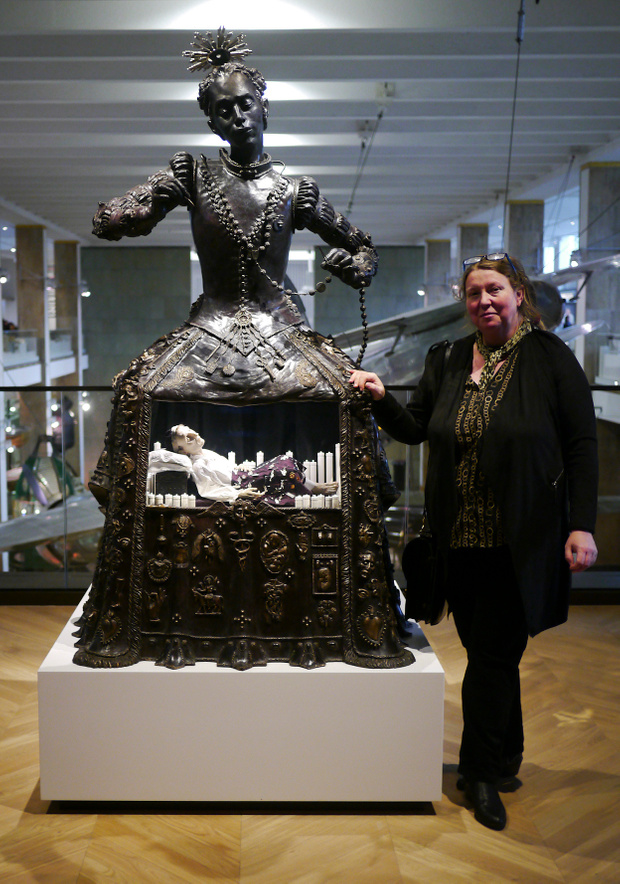
There is no doubting that the emphasis is on big. The enormous ‘Self-Conscious Gene’ by Marc Quinn, inspired by the tattooed body of model Rick Genest, greets visitors as they enter the galleries; five metres high towering above all the visitors at one end of the Medicine Gallery. At the other end of the gallery Eleanor Crook’s rather more thoughtful contemplative work ‘Santa Medicina‘ greets visitors. But more than the intention to produce a massive spectacle is the need to display work that enables people to enjoy science, to be stimulated by it and to remember science facts when you leave. The transformation of serious and complex science content into fun activities is consistently impressive. Visitors have the opportunity to engage with activities and look at displays that deal withs some very serious subjects in the most stimulating and enjoyable way.
Eleanor Crook
‘Santa Medicina‘ by Eleanor Crook, is a beautiful and intriguing bronze sculpture of a Baroque saint that is both surgeon and saint encouraging visitors to contemplate their relationship with mortality. The figure contains a wax reliquary of a sick patient and a few steps from the sculpture are to be found Crook’s own words:
‘I offer Santa Medicina as a patron saint for all who ever placed their hopes in the Science of Medicine: a defender against pain, sickness and mortality who faces down death with kindness and technology. We trust her endless ingenuity to keep our body stitched firmly to our soul, and when the end comes, to share that body with the living by transplantation.’ Santa Medicina by Eleanor Crook.
Siân Davey
The Wellcome commissioned Sian Davey, originally a psychotherapist, now a photographer, to produce a series of photographs entitled ‘Testament’ to explore the link between poverty and mental health issues such as depression and anxiety. A series of colour photographs of people, often women, as they cope with their difficult daily lives are displayed. These photographs are challenging and unexpected in the Science Museum setting and all the more powerful for that.
Studio Roso
Bloom‘ by Studio Roso is a kinetic sculpture which represents the spread of diseases through populations using a large network of propellers that spin, glow and change colour. A steel web structure suspended from the ceiling holds clusters of fans which spin and illuminate in patterns describing the spread of a virus. However beautiful and eye catching this work is it didn’t capture my imagination as much as other exhibits possibly because its beauty did not create a feeling of fear about viral pandemic that was intended? But others might think differently.
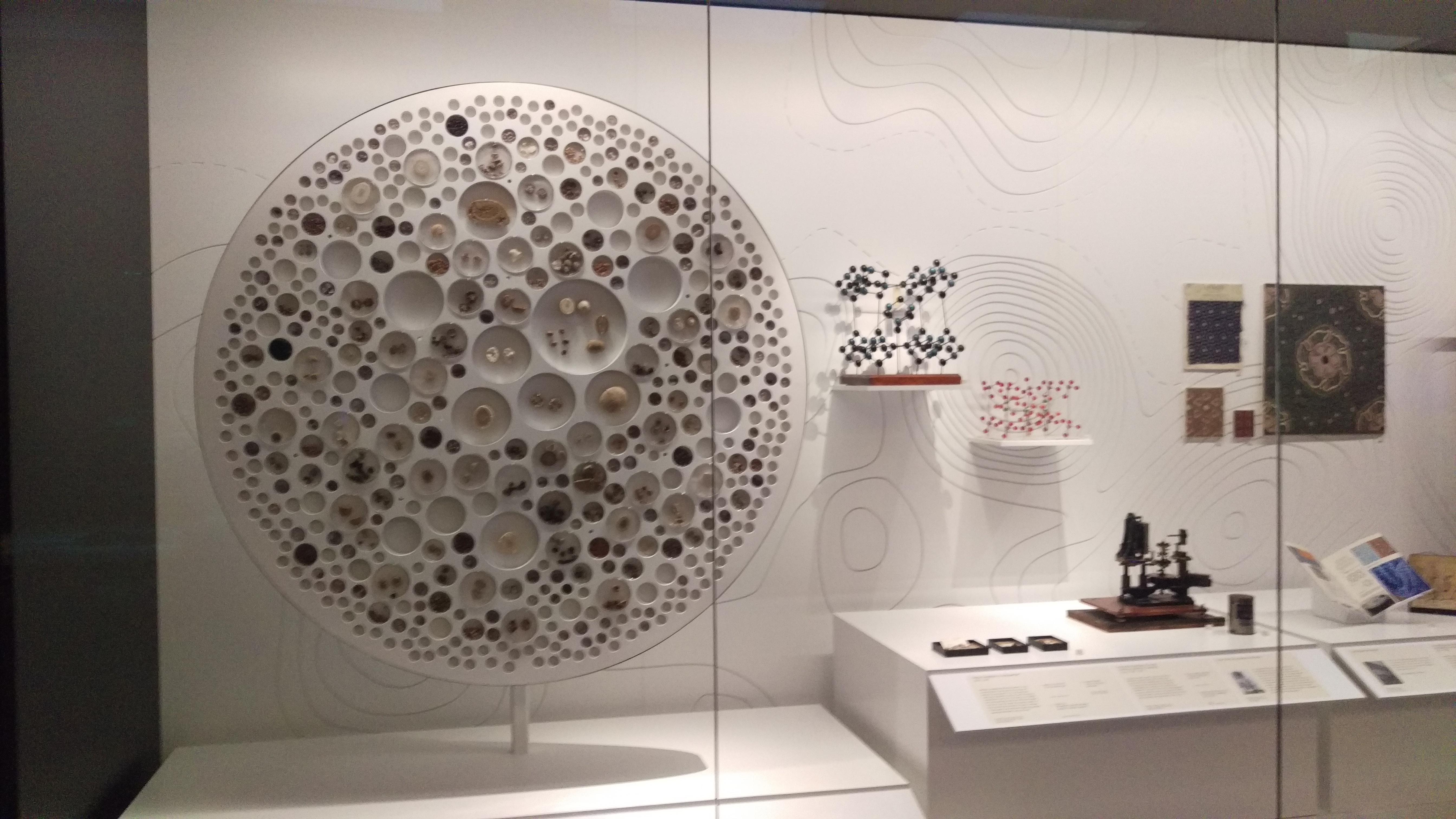
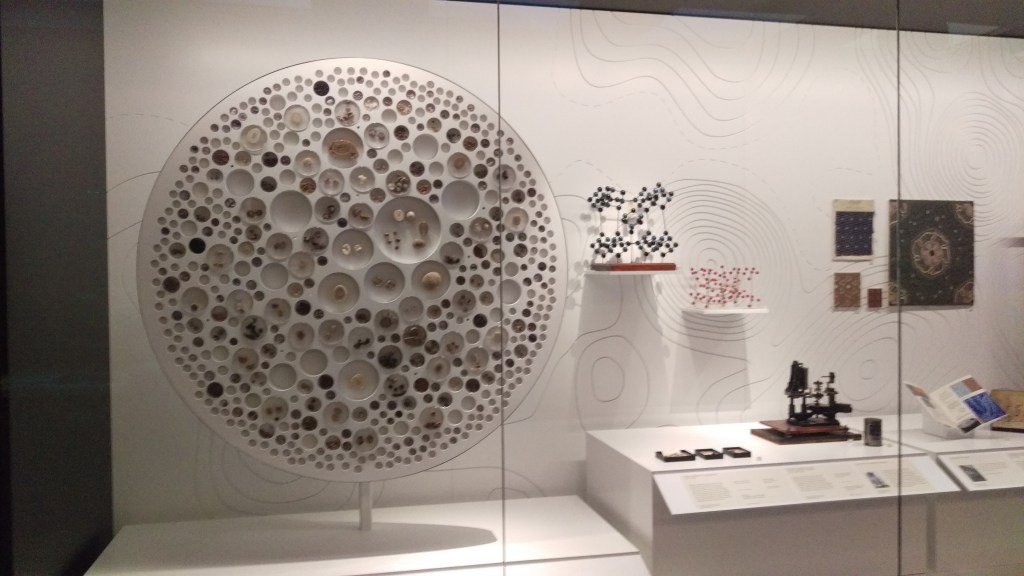
Main image: Photographer unknown (2019) Human gall bladder stones.
Available at: https://londonist.com/london/science-museum-s-new-medicine-galleries

 Public Facing
1 Comment